How to Choose an Oil Storage Tank Manufacturer
Choosing an Oil Storage Tank Manufacturer is a risk decision, not merely a purchasing exercise. The right supplier influences containment, inspection access, corrosion control, maintenance costs, and operational continuity. The International Energy Agency’s Oil 2024 report projects global oil demand will reach 105.4 million barrels per day by 2029. Storage infrastructure must therefore support growing volumes without compromising safety or reliability.
A credible manufacturer should demonstrate experience with your product, climate, capacity, foundation, and loading cycle. Ask for documented projects, welding procedures, material certificates, quality records, and inspection support. API 650 guides welded aboveground tank design, while API 653 addresses inspection, repair, alteration, and reconstruction. These standards matter. Paper compliance alone does not.
Tank-integrity specialist Steve Basham expresses the central principle clearly: “A tank is only as reliable as the inspection and maintenance program behind it.” That statement deserves careful attention. Manufacturer selection should include lifecycle planning, not only the lowest quotation. Review coating systems, leak detection, settlement monitoring, roof design, emergency response, and spare-part availability. Grand View Research has reported continued growth in the oil storage sector, driven by refining, strategic reserves, and expanding energy infrastructure. Growth can encourage rushed choices. That is where buyers may regret saving money early.
Visit a completed installation, if possible. Look closely at weld quality, drainage, access platforms, and paint breakdown. Speak with the operator, not only the sales team. A strong Oil Storage Tank Manufacturer will explain limitations honestly, identify uncertain assumptions, and provide verifiable references. That humility is useful. Even experienced buyers can overlook soil conditions, future capacity changes, or local inspection requirements. Reliability begins before fabrication.
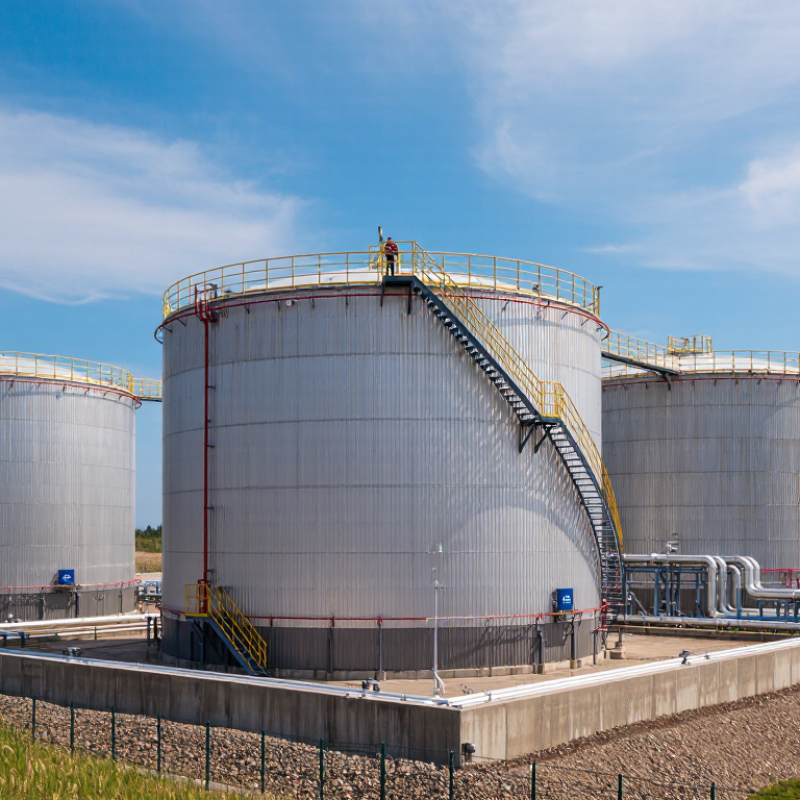
Define Your Oil Storage Requirements and Operating Conditions
Define your oil storage requirements before comparing any tank manufacturer. Record product density, viscosity, flash point, vapor pressure, corrosiveness, and expected temperature range. State whether the tank will store crude oil, refined products, or blended liquids. Small details matter. A liquid entering at 80°C creates different material and roof requirements than one stored near ambient temperature.
Estimate working volume, reserve volume, turnover rate, and maximum filling speed. The IEA’s Oil 2024 outlook projects global oil demand at 105.4 million barrels per day by 2030, increasing pressure on storage flexibility and dependable scheduling. Your site may not match that scale, but the principle remains relevant. A tank used weekly needs different fatigue planning from one filled twice annually. Do not guess. Ask the manufacturer to model vapor space, thermal expansion, settlement, wind, seismic loads, and emergency overfill protection. U.S. EPA rules identify 1,320 gallons of aboveground oil storage as a key threshold for spill-prevention planning, although local requirements may be stricter.
Operating conditions should guide the specification, not a standard catalog size. Reference API 650 for welded atmospheric tanks and API 653 for inspection and repair planning. NFPA 30 also provides widely used guidance for flammable and combustible liquid storage. Include access platforms, drainage, grounding, fire protection interfaces, coating compatibility, and inspection openings. A polished specification can still miss seasonal temperature swings or difficult maintenance access. That omission is worth challenging before procurement.
Compare Tank Materials, Designs, and Manufacturing Standards
How to Choose an Oil Storage Tank Manufacturer
Tank material affects service life, maintenance, and product quality. Carbon steel is common for large oil tanks because it offers strength and reasonable cost. It needs coating, corrosion allowance, and regular inspection. Stainless steel resists many aggressive fluids, but its higher cost may not suit every project. Fiberglass can resist corrosion, although temperature, impact, and installation limits require careful review. Material compatibility matters more than appearance.
Design choices should match the site and stored product. Fixed-roof tanks suit many stable liquids and protected locations. Floating-roof designs can reduce vapor space, but seals and drainage systems need close attention. Double-wall construction may improve spill control and monitoring. A complete design should consider wind, seismic loads, foundation settlement, nozzle loads, and access for inspection. Small details matter.
Manufacturing standards provide a practical quality baseline. API 650 is widely used for welded atmospheric storage tanks, while API 620 addresses certain low-pressure designs. EN 14015 may apply in other project regions. Welding procedures, qualified personnel, non-destructive testing, and dimensional checks should follow the selected standard. ISO 3834 can support consistent welding quality. However, a certificate alone proves little. Review inspection records, material traceability, pressure testing, coating reports, and previous project performance. I would also ask how defects are handled. No manufacturer gets every detail right. A transparent correction process is often more valuable than polished sales language.
Verify Manufacturer Experience, Certifications, and Quality Controls
Choosing an oil storage tank manufacturer requires more than comparing prices or reviewing polished brochures. Verify its experience with tanks similar to yours in capacity, material, design, and operating conditions. Ask for documented project histories, inspection records, and client references. A manufacturer experienced with large welded tanks should explain foundation requirements, corrosion risks, access systems, and maintenance planning clearly.
Certifications also need careful checking. Confirm that certificates are current, relevant, and issued by recognized accreditation bodies. Depending on the project, applicable standards may include API 650, EN 14015, or ISO 9001. Do not accept a certificate without checking its scope. It may cover office procedures, not tank fabrication. Quality controls should include material traceability, approved welding procedures, qualified welders, and documented non-destructive testing. Coating thickness, hydrostatic testing, and final dimensional checks deserve written evidence.
Tips: Request a sample quality dossier before signing. Check heat numbers on steel plates. Ask who approves repair welds. Visit the workshop if possible. Look at housekeeping, calibration labels, and inspection records. Small details matter. One easy mistake is trusting paperwork without observing production. A manufacturer may meet formal requirements yet communicate poorly during design changes. That weakness can become expensive later. Choose a team that explains limitations honestly, records deviations, and welcomes independent inspection.
How to Choose an Oil Storage Tank Manufacturer
Use a documented review framework that verifies manufacturer experience, relevant certifications, and quality controls before selecting a supplier.
The chart shows a sample 100-point procurement review model. The criteria reflect commonly verified evidence for fabricated storage tanks, including project experience, API 650 or equivalent design capability, ISO 9001 quality management, welding qualification, and inspection traceability. The percentages are buyer-assigned review weights, not market-share data.
Evaluate Total Costs, Delivery Terms, and Long-Term Support
Choosing an oil storage tank manufacturer requires more than comparing steel prices. Calculate the total installed cost: tank plates, coating, foundation, freight, erection, inspection, taxes, and spare parts. A cheaper quote may exclude site welding or corrosion protection. That omission becomes expensive later.
The IEA’s Oil 2024 report projects global oil demand to reach 105.4 million barrels per day by 2030. This outlook favors flexible storage capacity, not oversized assets with weak utilization. Ask manufacturers to explain tank sizing, expansion options, and energy use during construction. Delivery terms must define Incoterms, packing, port responsibility, inspection dates, and delay remedies. Require factory acceptance records, material certificates, weld maps, and a realistic commissioning schedule. Dates matter.
Long-term support often separates a reliable supplier from a temporary contractor. Review warranty coverage, coating repair procedures, inspection training, spare-parts availability, and emergency response times. API 650 design compliance is important, but API 653 inspection support may matter more after commissioning. Request evidence from comparable projects, not polished promises. The U.S. Energy Information Administration’s International Energy Outlook highlights continuing uncertainty in energy demand, so lifecycle flexibility deserves a price. I would also challenge my own assumptions: projected savings can fail when freight, site access, or delayed documents are ignored. Choose the manufacturer that makes those risks visible.



.svg)